HD Hyundai Wins $673M Engine Order for US Data Centers
HD Hyundai Heavy Industries has secured a $673.8 million contract to supply 1,000 megawatts of HiMSEN engines to U.S. data centers, bypassing slow utility grids with on-site power.
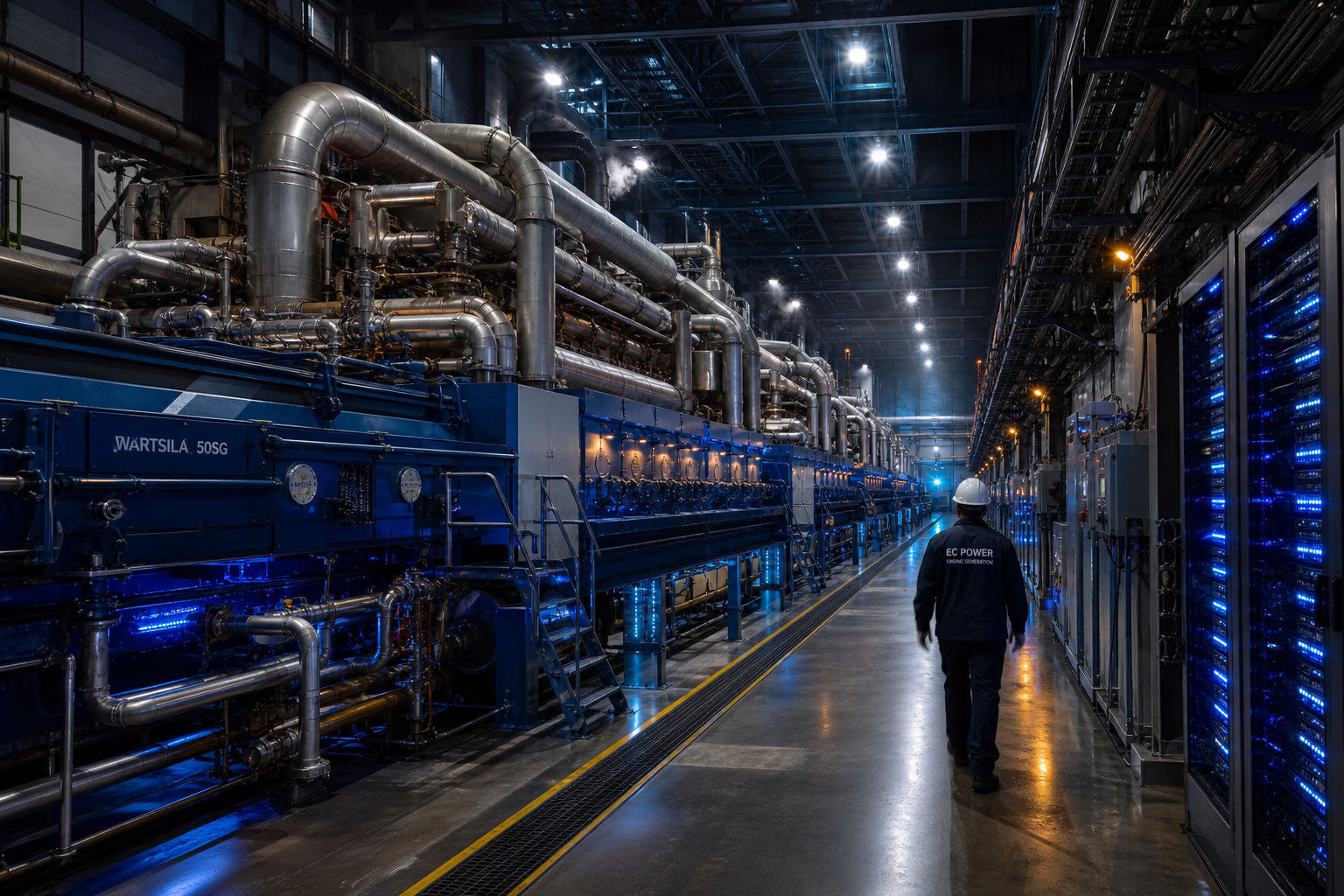
On August 9, 2026, HD Hyundai Heavy Industries announced a record-breaking $673.8 million contract to supply 1,000 megawatts of power generation systems to U.S. data centers. The deal, signed with New Jersey-based energy infrastructure developer Corban Energy Group, will provide prime power to facilities operated by an unnamed major U.S. technology company. The order relies on HD Hyundai's 9.6-megawatt HiMSEN engine, a medium-speed, natural-gas-fired unit designed for continuous, round-the-clock generation.
This agreement represents the largest power-generation engine contract in the history of HD Hyundai Heavy Industries. It comes just four months after the company's initial entry into the U.S. data center market in April 2026. That previous deal with Aperion Energy Group was valued at $425 million for 33 natural-gas engines generating roughly 684 megawatts using 20-megawatt-class units. By contrast, the new Corban contract is significantly larger and utilizes the smaller 9.6-megawatt HiMSEN engines, implying that approximately one hundred units will be deployed across the designated sites.
For data center practitioners and infrastructure planners, this massive procurement highlights a critical shift toward on-site power generation. As utility grid interconnection queues stretch into years, operators can no longer rely solely on local grids to meet their soaring energy needs. According to the Electric Power Research Institute's Powering Intelligence 2026 analysis, data centers currently consume about 4 to 5 percent of U.S. electricity, but that share is projected to surge to between 9 and 17 percent by 2030.
Deploying modular, medium-speed engines like the HiMSEN line allows operators to scale capacity in 10-megawatt increments rather than waiting for massive utility projects. These natural-gas systems offer rapid start-up times and stable load responses, which are crucial for maintaining the continuous uptime required by AI workloads. However, practitioners must weigh this rapid deployment against the long-term operational costs and emissions profiles associated with a dedicated natural-gas supply.
This is our own summary of reporting by Unite.AI