Stanford uses Evo models to design synthetic viruses
Stanford researchers used the Evo 1 and Evo 2 genome models to design functional synthetic viruses, proving AI can generate viable biological entities with complex, non-random mutations.
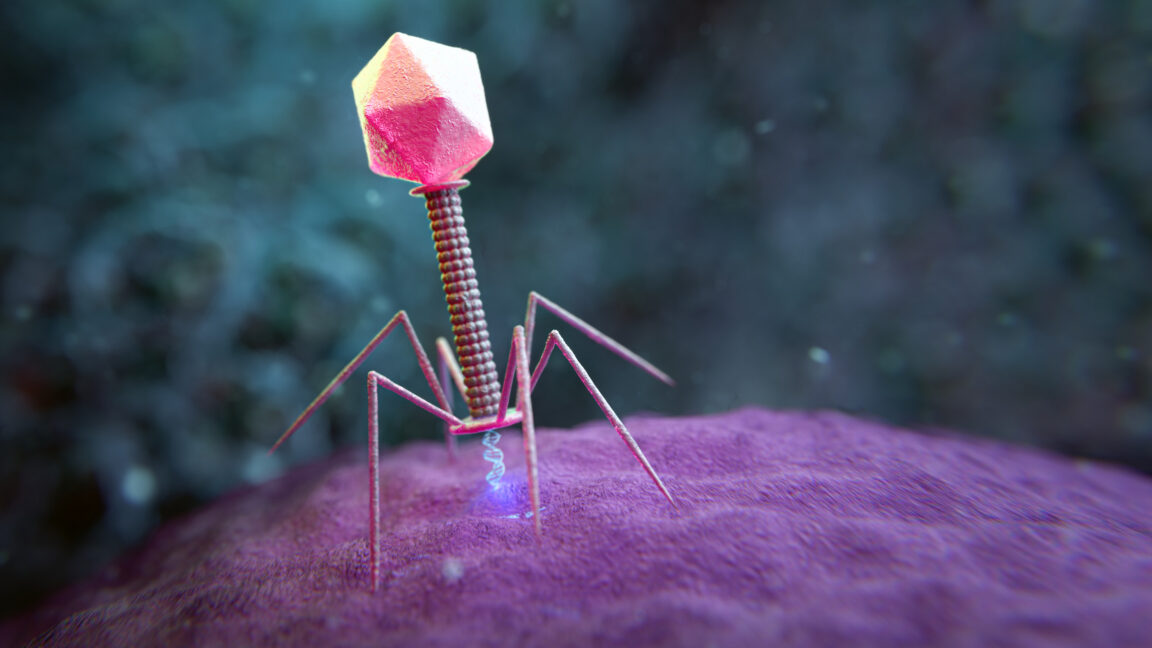
Stanford University researchers have successfully utilized large genome models, named Evo 1 and Evo 2, to design functional synthetic bacteriophages. The team targeted ΦX174, a well-characterized virus containing 11 genes across approximately 5,400 bases that infects E. coli. To prepare the models, the scientists trained them on over 2 million bases of bacteriophage DNA and fine-tuned them on Microviridae sequences. By prompting the models with short start sequences of 4 to 9 bases, the AI generated diverse genomic designs.
To filter out unviable designs, the researchers discarded sequences with spike proteins under 60 percent identical to the original, lengths outside 4,000 to 6,000 bases, single-base repeats over 10 bases, or abnormal GC/AT ratios. This left 302 proposed viral sequences, of which 285 were chemically synthesized and tested. Ultimately, 16 of these sequences successfully inhibited E. coli growth, indicating they functioned as active viruses. Nine of these were direct AI outputs, while seven acquired additional mutations post-insertion.
While the overall viability rate was 5.6 percent, it rose to 46 percent for sequences with at least 98 percent similarity to ΦX174. Typically, a single amino acid change carries a 20 percent chance of inactivating this fragile virus. Statistically, any sequence with over 25 changes has a near-zero percent chance of survival, and those with fewer than 25 have only a 2.3 percent chance. However, nearly a quarter of the AI-designed genomes with more than 25 changes remained viable, including two containing over 50 amino acid alterations. This proves the AI can navigate complex, multi-site mutations far better than random chance.
For biotechnology practitioners, this capability opens new doors for phage therapy. In comparative tests, a cocktail of the 16 viable AI-generated viruses successfully overcame bacterial resistance that defeated a natural bacteriophage cocktail. However, the researchers warn of biosecurity risks. While they intentionally excluded vertebrate-infecting viruses from Evo 1 and Evo 2, the same methodology could easily be replicated by others to design pathogens targeting humans.
This is our own summary of reporting by Ars Technica AI