SK hynix Approves $39 Billion for Two AI Memory Fabs
SK hynix approved 54 trillion won for two new fabrication plants to secure the high-bandwidth memory and enterprise SSD supply chains essential for scaling artificial intelligence.
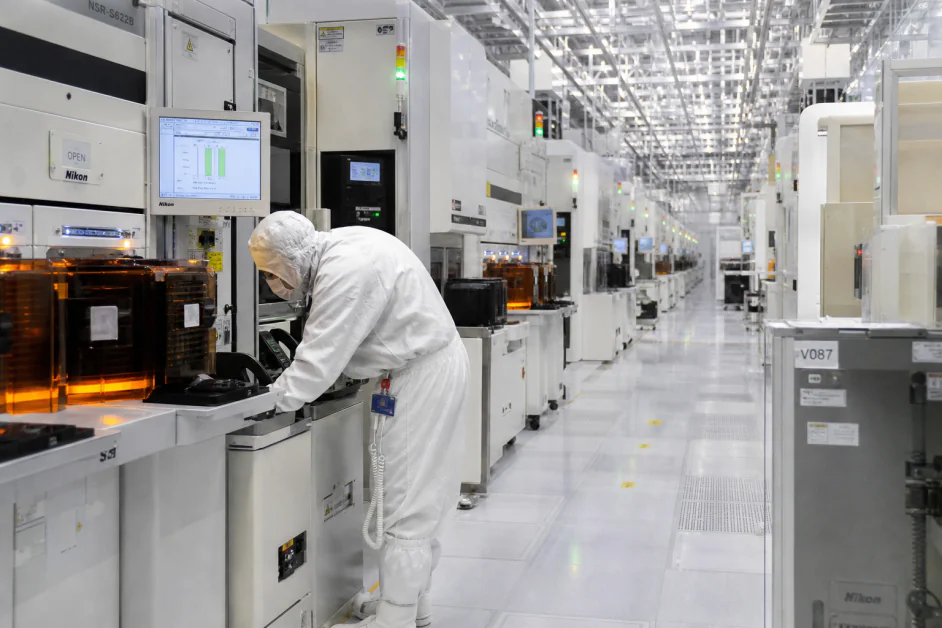
On August 7, 2026, SK hynix's board approved 54 trillion won (about $39 billion) for two new manufacturing facilities. The company is allocating 35.2 trillion won to build "Y2," a DRAM facility in the Yongin Semiconductor Cluster, and 19.1 trillion won for "M17," a NAND flash facility in Cheongju. These investments fund the first phases of a 1,100 trillion won long-term expansion plan—which includes 600 trillion won for Yongin, 100 trillion won for Cheongju, and 400 trillion won for a Southwestern Region hub.
The Y2 facility will cover 1.13 million square meters, breaking ground in July 2027 with its first cleanroom opening in June 2029. Focusing on HBM and next-generation DRAM, Y2 is the second phase of the Yongin cluster, where the Y1 fab is already under construction for a February 2027 cleanroom debut. This acceleration pulls the cluster's completion timeline forward from 2045 to 2033. Meanwhile, the 680,000-square-meter M17 facility will break ground in February 2027, with its cleanroom operating by December 2028. M17 will plug into the Cheongju site, which already hosts the M11, M12, and M15 fabs.
These expansions address a projected 19% compound annual growth rate for DRAM and NAND demand from 2025 through 2030, according to Omdia. Rather than treating this as a temporary cycle, SK hynix is building structural capacity to ensure timely delivery to partners like Nvidia. By decoupling physical building construction from immediate equipment installation, the chipmaker can establish the physical shells now and scale up actual wafer production machinery only as direct customer orders materialize.
For AI practitioners, this massive supply response promises to alleviate severe hardware bottlenecks. The Y2 fab will directly boost the availability of HBM required for training massive models, while the M17 fab will churn out the high-capacity enterprise SSDs and key-value cache storage needed for rapid inference. By stabilizing the supply of these critical components, developers can expect more predictable hardware pricing and scaling paths for agentic AI applications that rely heavily on vector caching to prevent redundant computations.
This is our own summary of reporting by Unite.AI