Bipartisan Backlash Hits US AI Data Center Expansion
A growing bipartisan backlash against AI data centers has sparked over 100 local moratorium proposals, threatening the physical infrastructure needed to scale artificial intelligence.
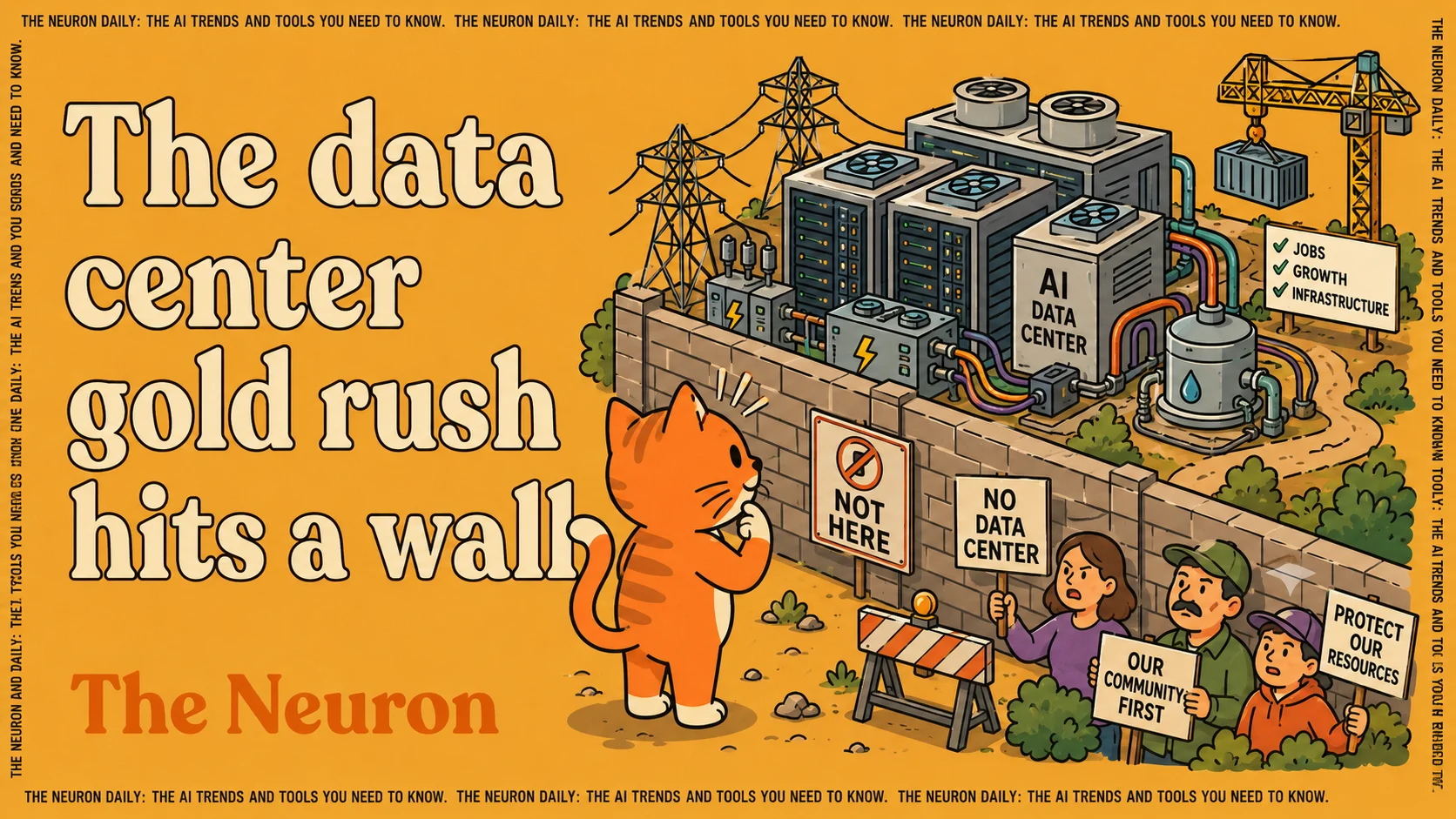
A widespread public backlash against AI data centers is mounting across the United States, uniting communities across political divides. Following a ten-day, four-site research trip through Wisconsin and Michigan, researcher Jasmine Sun reported on The Ezra Klein Show that roughly 70 percent of local residents oppose having a data center built nearby. This growing resentment has already fueled more than 100 active proposals for construction moratoriums in various municipalities.
Local opposition stems from several critical concerns, including massive electrical grid demands that threaten to raise utility rates for residents to fund infrastructure for a single corporate customer. Beyond aesthetic complaints about unsightly facilities, communities are pushing back against constant noise and water consumption, even when developers deploy newer closed-loop recycling systems. Unlike traditional industries like automotive manufacturing, AI currently lacks a local constituency because residents do not believe these facilities will deliver promised tax revenues or permanent jobs.
While some developers are finding success by offering transparent benefits—such as spending $30 million to clean up contaminated industrial land and revive defunct factories—the threat of widespread local bans remains high. If domestic moratoriums block expansion, infrastructure developers warn that compute resources will inevitably shift to other states, overseas, or even into space. This migration could weaken domestic control over critical computing power, which serves as vital geopolitical leverage for frontier models and cybersecurity.
For AI practitioners and developers, this infrastructure bottleneck represents a fundamental shift in how models must be designed. Instead of relying on brute-force scaling through massive physical expansion, engineers may be forced to prioritize algorithmic efficiency, local deployment, and better alignment. The physical limits of the grid mean that software optimization, rather than endless hardware accumulation, will become the primary pathway for advancing AI capabilities.
This is our own summary of reporting by The Neuron