Reflection AI and Mistral Release New Open-Weight Models
The launch of Reflection AI’s Beam and Mistral’s Large 4 preview gives Western enterprises powerful open-weight alternatives to proprietary systems and Chinese models.

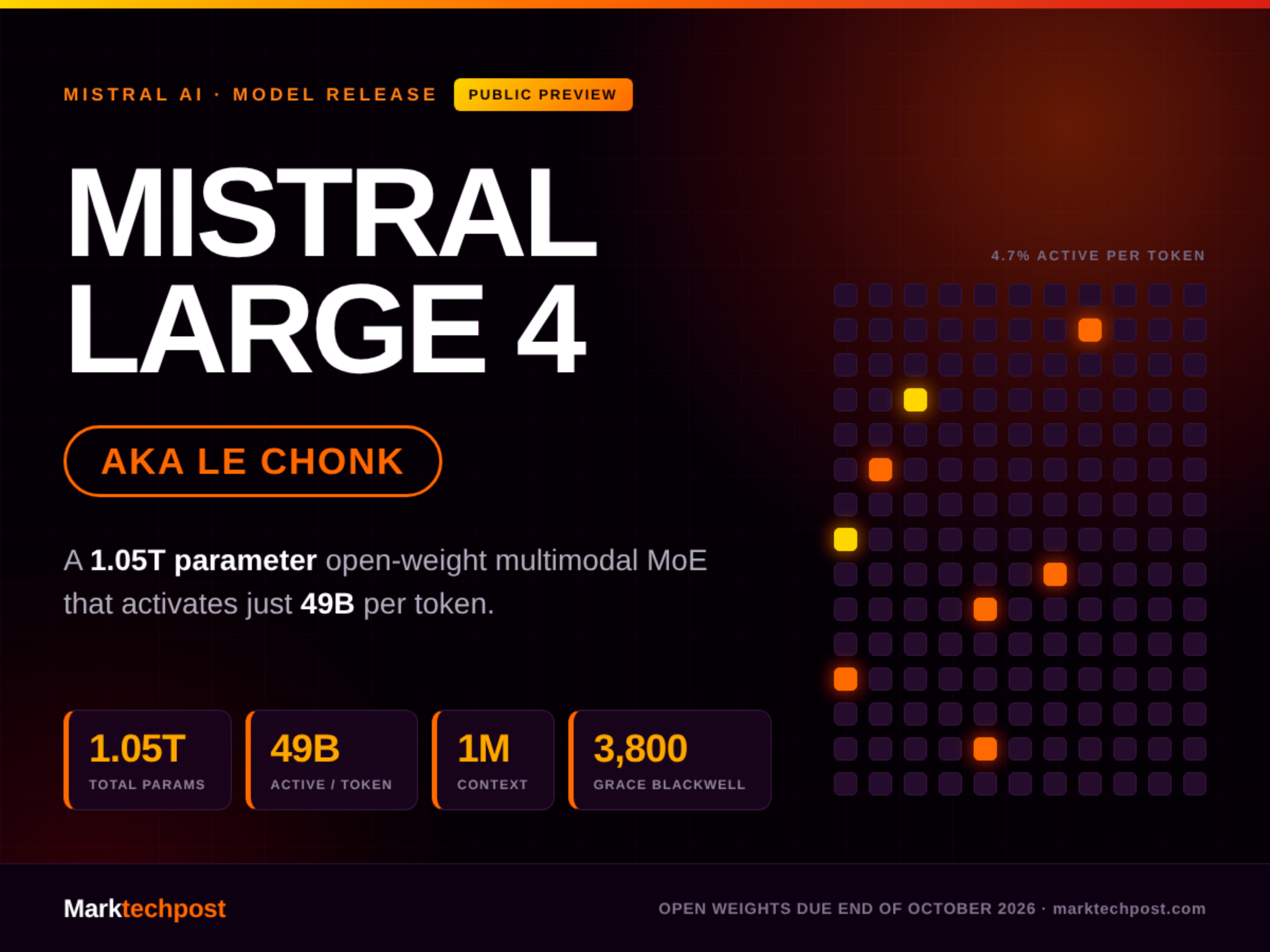
Western enterprises seeking greater control over their artificial intelligence deployments have two new options. Nvidia-backed Reflection AI recently launched its Beam open-weight model, while French AI startup Mistral previewed its upcoming Large 4 model. These releases mark a significant shift in the open-weight landscape, which has recently been dominated by Chinese offerings from companies like Alibaba, DeepSeek, Moonshot, and Z.ai, alongside top-performing systems like Kimi and GLM.
For IT leaders and developers, these new models provide a crucial middle ground. Previously, organizations had to choose between the strict data privacy of hosting open-weight Chinese models—which often carry compliance and security risks for Western firms—or relying on proprietary Western APIs that limit customization. With Beam and Large 4, businesses can run highly capable systems within their own secure infrastructure, fine-tune them using proprietary data, and establish independent update schedules without vendor lock-in.
While open-weight models are not always cheaper than proprietary APIs once GPU hosting and engineering costs are factored in, they offer unmatched autonomy. Prince Kohli, chief executive of Sauce Labs, noted that Chinese developers initially gained an advantage in price-performance by prioritizing hardware efficiency. However, Kohli expects this gap to close as Western engineering resources pivot toward optimization. Jeet Pattanaik, chief technology officer of Glokal AI, added that open weights are transitioning from experimental tools to "a real procurement option for Western enterprises."
However, adopting open-weight models introduces new operational demands. Unlike fully open-source software, open-weight models do not necessarily reveal their training data or methodologies, meaning enterprises must still implement external governance frameworks. Organizations choosing this path must take full responsibility for security, performance evaluation, and licensing compliance, rather than relying on a third-party cloud provider to manage those risks.
This is our own summary of reporting by AI Business