OpenAI Upgrades GPT-5.6 Sol and Expands Free Luna Access
OpenAI has upgraded its GPT-5.6 Sol model for paying subscribers and made GPT-5.6 Luna the unlimited default for free users, significantly reducing factual errors across both tiers.

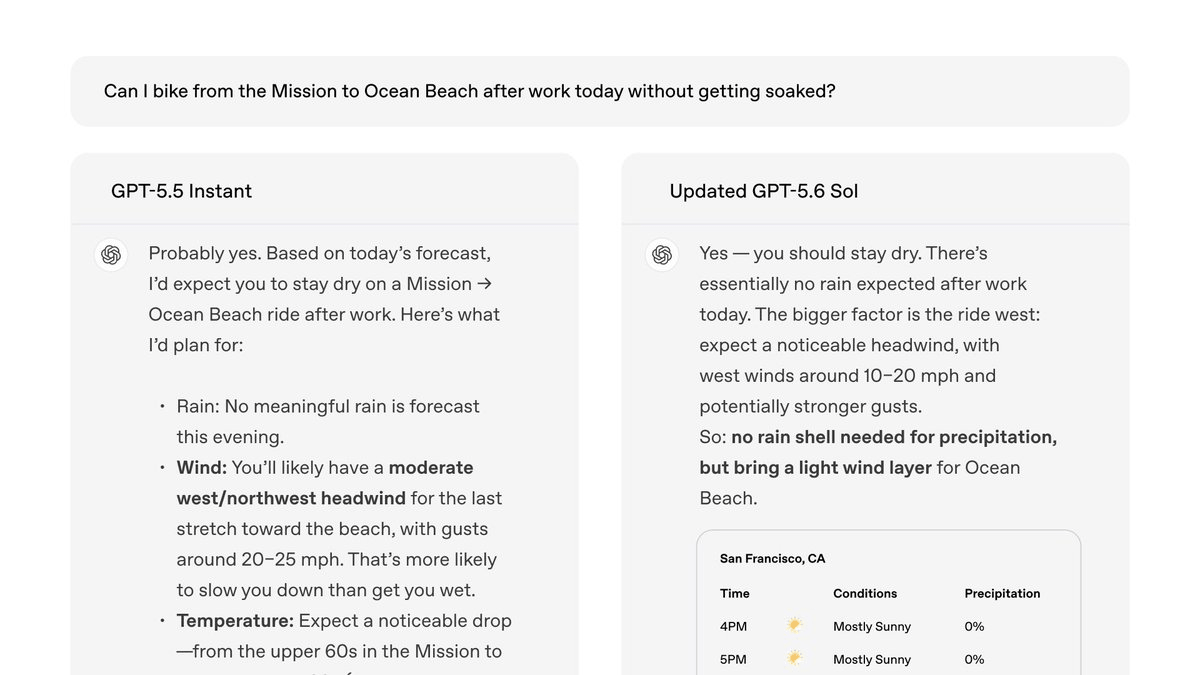
OpenAI is rolling out major updates to its ChatGPT lineup, targeting its massive user base of 1 billion weekly visitors. For paying Plus and Pro subscribers, the company has updated the GPT-5.6 Sol model in the Chat experience to deliver more focused, direct, and factually reliable answers. These premium users also gain access to a new slider tool that allows them to manually adjust how much processing time and thought the model dedicates to a given prompt.
Free and Go tier users are receiving a substantial upgrade as GPT-5.6 Luna becomes their default model this week. Starting next week, these free users will get unlimited text chats and a new Think button to trigger deeper reasoning for complex questions, though limits remain on image and file uploads. To ensure safety for users under 18, OpenAI trained these models to avoid romantic roleplay, dangerous activities, and graphic violence, while adding system-level guardrails.
The updates represent a major leap in factual accuracy. In OpenAI's internal evaluations of complex financial, medical, and legal prompts, responses with at least one factual error were 68% less common with GPT-5.6 Sol and 62% less common with GPT-5.6 Luna compared to the older GPT-5.5 Instant model. For developers and professional practitioners, this means a dramatic reduction in hallucinations during critical research, planning, and coding tasks.
While the updated GPT-5.6 Sol is available immediately to Plus and Pro users, OpenAI noted that this optimization is exclusive to the standard ChatGPT conversational interface. The versions of GPT-5.6 Sol powering the Work and Codex platforms remain unchanged. By bridging the gap between instant replies and deep reasoning, the update aims to provide a more consistent tone across different levels of cognitive effort.
This is our own summary of reporting by OpenAI Blog