OpenAI builds GPT-Live to power real-time voice AI
OpenAI has developed GPT-Live, a full-duplex voice system that eliminates traditional turn detectors to make conversational AI feel as responsive and natural as human speech.
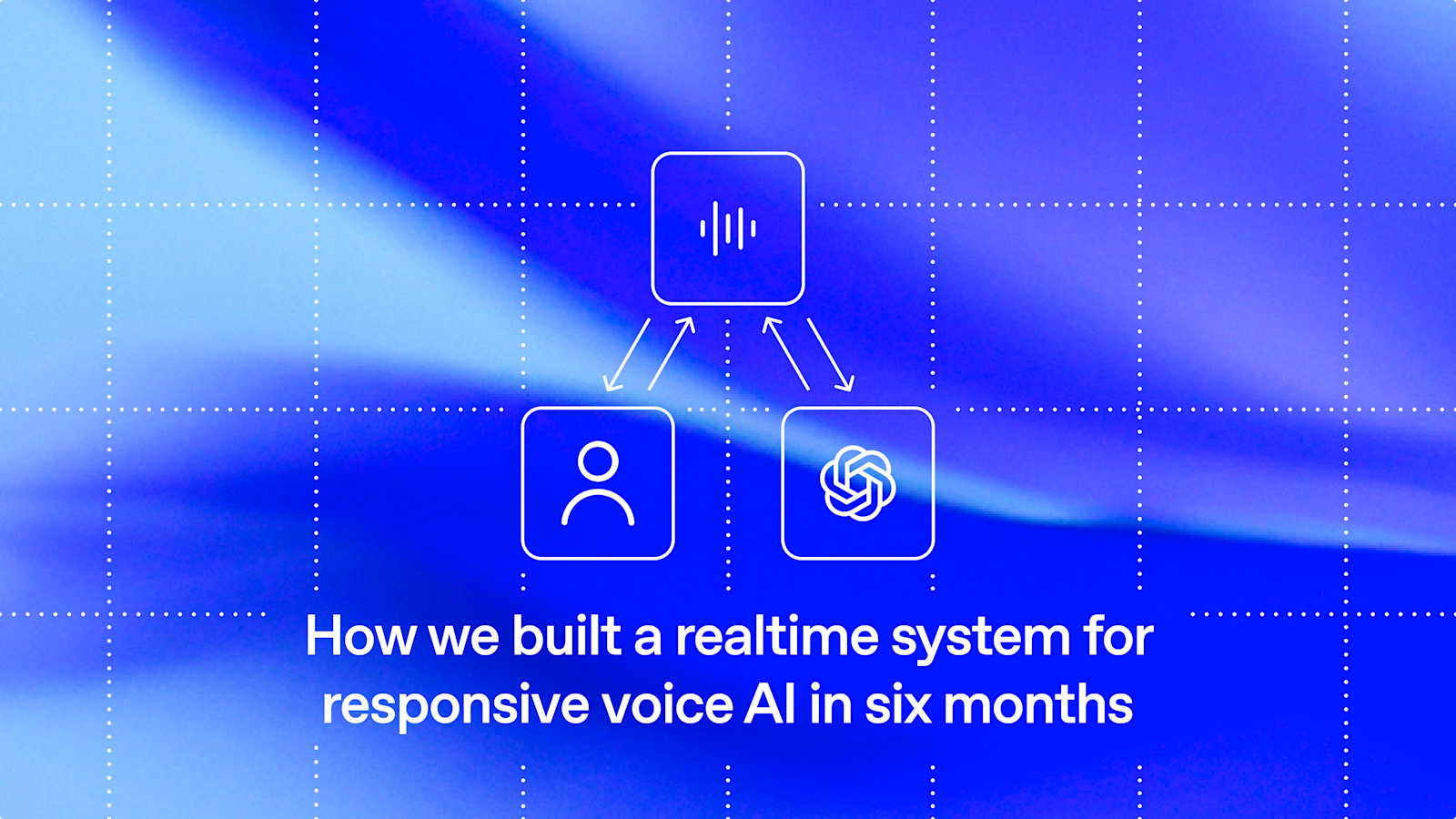
OpenAI has unveiled GPT-Live, a third-generation voice system engineered over the last six months to deliver highly responsive, natural verbal interactions. Unlike older architectures that relied on turn detectors to guess when a user finished speaking, GPT-Live uses a full-duplex model that can listen and speak simultaneously. When the system requires deeper reasoning or tool use, it can asynchronously consult frontier models like GPT-5.5 Instant without interrupting the active audio stream. This foundation currently powers features in ChatGPT Voice, including computer control and agent coordination in the desktop app, and will eventually underpin an upcoming GPT-Live API.
To achieve sub-second latency, OpenAI overhauled its entire inference and media transport pipeline. The engineering team rewrote the media frontend and inference logic in Go, replacing a previous Python asyncio implementation. This language transition yielded massive performance gains, bringing the new system's p95 latency down to match the previous system's p50 latency. Audio flows continuously between the client and the voice model on a dedicated fast path, while application logic and tool calls are handled behind an asynchronous remote procedure call boundary to prevent backend delays from stalling the conversation.
OpenAI also optimized the underlying network protocols to accelerate session startup. Standard WebRTC connections typically require six network round trips to establish media and data channels. To bypass this bottleneck, OpenAI developed the WebRTC Abridged Roundtrip Protocol, or WARP, which collapses the startup sequence into a single round trip. WARP achieves this by piggybacking the DTLS handshake over ICE (SPED), adopting DTLS 1.3, and pre-negotiating SCTP handshakes (SNAP) and data channels. Additionally, a feature called Instant Connect negotiates parameters ahead of time, allowing clients to initiate a live session with a single UDP packet.
Before deploying the system, OpenAI conducted silent production testing by routing a portion of ChatGPT Voice traffic to both the existing Advanced Voice Mode and a shadow GPT-Live path. This real-world testing revealed that scaling voice AI requires managing CPU-side stream handlers and regional network geography rather than just GPU throughput. The company has proposed WARP as an open specification to the IETF's TSVWG working group to benefit the broader WebRTC ecosystem.
This is our own summary of reporting by OpenAI Blog